

The news of this wonderful story reached us through one of our team members in Latin America.
What happens when a city plants trees instead of simply building more concrete? Medellín, Colombia, gives us an inspiring answer!
Medellín has become famous for its “Green Corridors”, a network of tree- and plant-filled routes designed to bring nature back into the city.
And the results are remarkable!

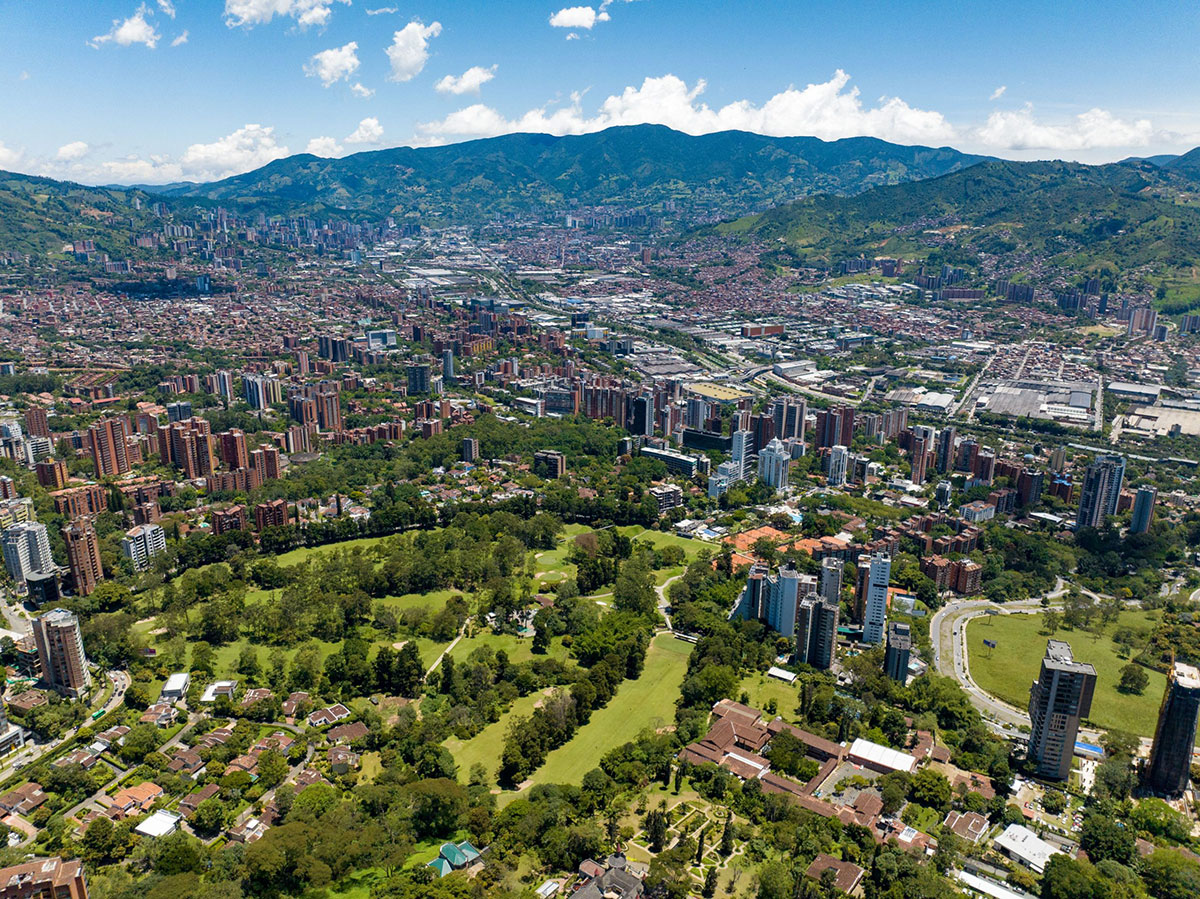
Medellín, Colombia
Since the project began in 2016, Medellín has reduced its urban heat-island effect by around 2°C (3.6°F). Now, that may not sound like a huge number at first, but cooling an entire urban environment by 2°C is a significant achievement! Especially given that cities around the world are becoming increasingly affected by rising temperatures.
The project has also received international recognition, including a 2019 Ashden Award for climate solutions.
Like many growing cities, Medellín has large areas covered by roads, buildings and other hard surfaces. These materials absorb heat from the sun and release it slowly, contributing to what is known as the urban heat-island effect.
The Green Corridors project took a different approach: instead of treating nature as something separate from the city, Medellín began making it part of the city’s infrastructure.
The initiative created a network of 30 green corridors, including 18 along major roads and 12 connected with waterways. Trees, shrubs, gardens, and other vegetation were planted along these routes, creating greener connections between different parts of the city.
The result is not simply a city with more trees. It is a city where vegetation has been deliberately placed where it can help people and the environment.

One of the many “green roads”
But how do trees actually cool a city?
There are two particularly important ways.
First, shade: Trees block sunlight from reaching roads, pavements, buildings and people. This prevents surfaces from absorbing as much solar energy in the first place. Anyone who has walked from a sunny pavement into the shade of a large tree knows how dramatic the difference can feel.
Second, evapotranspiration: Trees absorb water through their roots and release water vapour through their leaves. This process, known as evapotranspiration, uses heat energy to turn water into vapour, helping to cool the surrounding air.
The U.S. Environmental Protection Agency explains that shade and evapotranspiration can lower both surface and air temperatures. Research reviewed by the EPA has found that areas with mature trees can be several degrees cooler than comparable areas without them, while tree groves have recorded peak air temperatures around 5°C cooler than open terrain.
So trees are not simply making a place look greener. They are changing the way heat and water move through an urban environment.

Another look at Medellín’s greens
The Green Corridors also provide benefits beyond cooling.
More vegetation can improve urban biodiversity, provide habitat for wildlife, help filter air pollutants and create more pleasant places for people to walk and spend time. Medellín’s programme has also expanded green space and connected roads, waterways, hills and parks.
The city has continued expanding and maintaining its green infrastructure, with thousands of trees and extensive areas of gardens and vegetation being planted and cared for.
Thus, Medellín’s story offers a wonderfully simple idea: sometimes the best way to cool a city is to bring nature back into it.
Of course, a tree cannot replace every piece of urban infrastructure. Imagine tree-traffic lights. Sounds cool? Yes! Practical? Not really.
But, when thousands of trees and plants are thoughtfully integrated into roads, waterways, parks and neighbourhoods, their combined effect can be powerful.
A 2°C reduction may be only a number on a thermometer, but behind that number are cooler streets, more shade, more vegetation and a city that is making room for nature.
Medellín shows us that planting trees is not only about restoring forests far away.
If you are inspired by this story and if you would like to make your city green too, please tell us about it! We would love to hear your plans and promote your work to our global community!
_____
References:
Images:
Image 1: Medellín, Colombia
Image 2: One of the many “green roads”
Image 3: Another look at Medellín’s greens
Title image: C40 Knowledge Hub
Information:
https://www.weforum.org/stories/2024/01/nature-positive-cities-tackle-extreme-heat/
https://www.weforum.org/stories/climate-action/colombias-medellin-plants-green-corridors-to-beat-rising-heat/
https://www.medellin.gov.co/
https://www.epa.gov/heatislands/benefits-trees-and-vegetation
https://www.c40knowledgehub.org/s/article/Cities100-Medellin-s-interconnected-green-corridors?language=en_US
https://ashden.org/awards/winners/alcaldia-de-medellin/



0 Comments